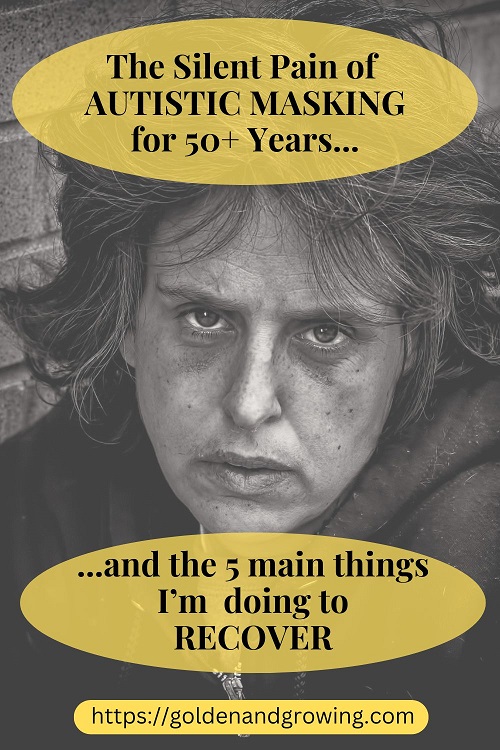
We neurodivergent women who have been masking for decades inevitably hit autistic burnout. How it happens, my story, and how to begin recovery.
The story (Can writer’s block really be an autistic burnout symptom?)
The words on the screen mocked me. They mocked me because they stood as rigid as an ancient Greek pillar, refusing to spread and grow and multiply.
I could not think of the next word to type. Even though I had an outline for the story. It was the worst case of writer’s block I’d experienced since beginning to self-publish novels in 2012.
Dismayed, I walked away from the story. Returned to it the next day with no better results. Then the next day, then the next.
At that point I realized: I didn’t care anymore. Though I’d written two novels in what was supposed to be a four-novel series, though I could usually finish off a quality novel in less than eight weeks, I simply didn’t care.
I was burned out on writing romance novels. Maybe novels in general.
What I didn’t realize was that my brain was trying to tell me something that went far deeper than writer’s block.
The Queen of Masking has left the building.
At the time of the above story, I’d known I was neurodivergent for close to two years. Although I’d watched a lot of videos created by late-diagnosed autistic women and men, I’d been ignoring the whole burnout-masking issue. I was fine, I thought. I’d left the workforce when I got pregnant at age thirty-five, and my husband left his job less than ten years later. We were living a quiet life in a rural area, without pressure from jobs or having to obey city property standards and deal with big-city traffic. What did I have to be burned out about?
As far as masking, sure, I masked. But didn’t everybody? I mean, it was rude just to spout off your opinions about everything and everybody. Growing up with an autistic sister who was unable to mask, I knew how hurtful it could be to stand on the receiving end of someone who didn’t follow society’s rules of politeness.
I was tired, that was all. Perimenopause had kicked me in the rear, and postmenopause I was experiencing broken sleep nearly every night. I was chronically tired, not burned out.
I claim ignorance. The truth is, autistic burnout had slid up to me with the stealth and silence of a tiny grass snake, then gripped me with the force of a ten-foot-long boa constrictor. I confused it with menopause fatigue because the two have a lot in common, such as brain fog, constant tiredness, and mood swings. (Welcome to midlife autism in women!)
Dealing with either issue makes it hard to care about anything. You might not be depressed, just… too exhausted to care. And when you receive the double whammy of neurodivergent burnout and menopause at the same time, you start to see where you’ve been autistic-masking your entire life.
Because seemingly overnight, you can’t do it anymore.
How autistic masking leads to burnout.
As I stated earlier, everybody masks a little bit. We shouldn’t expect perfect strangers or acquaintances to carry our burdens, so it’s kind of not nice to dump all of our crap into their lap when they ask, “How are you?”
Some autistic women, like my sister, were absent the day the Powers That Be passed out the ability to pretend to be someone else for the Sake of Fitting In. Many more – maybe most? – neurodivergent women, feeling that innate need to connect with others, learn early on what to say and how to behave in order to get others to like them. To be their friends.
While occasional masking to keep the peace is fine, neurodivergent women tend to do it all the time. To some extent, they even mask when at home with family.
- They suppress their need to stim.
- They don’t set boundaries on their energy.
- They ignore their sensory sensitivities so as not to be left out or seen as “weird.”
- Those of us who were late-diagnosed received no accommodations in the classroom, so we had to pretend all was well there. Ditto for the workplace once we grew up.
This constant suppression of and ignoring our neurological needs causes stress to build up. Then there are the caregiving roles piled on top of the masking. Spend four decades or more with this combination churning inside your life, and burnout results.
What happens with most women is that we burn out periodically as we move through life. If we don’t realize what’s happening (I didn’t), we don’t allow ourselves to fully recover. And we don’t take the necessary steps to protect our energy and reduce sensory stress.
So the burnout cycle snowballs, until we get to a place where we crash and burn.
For most of us, that’s sometime after we hit perimenopause.
If you’ve been paying attention, you might be asking, “What’s writing novels got to do, got to do with it?” Well, let me tell you, Tina Turner.
My self-publishing journey: yet another people-pleasing circus.
When I first began writing novels for self-publication, I was confident that soon, I’d be making a full-time income from the endeavor. After all, I was a good writer and worked hard to make my stories interesting. I’d even attended a writer’s group for awhile and received a lot of positive feedback.
Then I started reading the negative reviews for my self-published books.
“Boring.”
“Not my cup of tea.”
“The main character was totally unlikeable.”
That last one cut deep. I had modeled the character after myself.
Triple ouch.
I started studying the clean and Christian romance novels from authors who were doing well. Read more about the craft. Found a formula to follow.
Being autistic, I’m good at following rules.
As I continued to write, I emulated what I believed to be good romance stories. I even bribed my readers with a free novel in exchange for them getting on my email list.
Long story short: After years of trying, I never got more than 150 subscribers on my email list. And despite most of my ratings on all of my novels being four and five stars, I never came anywhere near making a full-time income.
This desperation to please an invisible audience was yet another form of masking, and it took its toll. It might have been the layer of stress that brought me to the point of wanting to throw it all away.
Autistic burnout recovery strategies after 50: a long and winding road.
As I write this post, I’m still recovering from burnout. But realizing what’s going on, I am now taking steps to recover. And I’m starting to feel better.
I’m even seeing a day where I might possibly be able to write novels again. Maybe.
I want to share what I’ve been doing to encourage you to begin to take your own steps to recovery.
I’ve put on a cloak of patience.
This is the initial step everyone suffering from burnout must take. No matter what books you read, and how religiously you follow some therapist’s steps, recovery from burnout doesn’t happen overnight. According to some studies, it can take years.
The good news is that the remaining steps of burnout are not arduous.
I’ve begun my “unmasking autism” journey.
Since constant masking is what leads to burnout, then it stands to reason that one of the most important things you need to do for recovery is to unmask.
To unmask is to stop trying to please others at the risk of adding more stress to your life. It’s developing the confidence to stim around other people without discomfort. It’s being able to kindly but firmly state your boundaries – regarding your energy, your ability to socialize, your sensory needs.
It’s about making your home sensory friendly. It’s about carving out time in your day to relax. It’s also about not squelching your thoughts and opinions for fear someone will consider you to be rude or blunt. (Just be sure to ask yourself before speaking: Is it true? Is it kind? Is it necessary?)
I mitigate my hormone issues.
You don’t want to have to deal with the symptoms of low estrogen and low progesterone on top of burnout. I use progesterone cream and take a magnesium supplement, as well as eat a clean diet. Other women go with HRT.
Experiment and find out what works for you.
I’m running this blog.
Seriously.
Writing is not only one of my first loves, but also one of my primary stims. A day where I don’t spend at least an hour composing something is a day fraught with anxiety and restlessness.
Recovering from neurodivergent burnout isn’t a matter of resting as much as you can. It also involves engaging in the activities that bring you joy, or that at least boost your serotonin and endorphin levels.
If you’re at the beginning of your burnout recovery, it’s possible that you can’t find any joy, even from your favorite hobbies or special interests. That’s okay, and that’s normal. Indulge in a lot of relaxing music, or your favorite movie genre, or your favorite T.V. series. Get a coloring book and color as much as you want.
If the indifference towards your previously favorite activities continues for weeks, however, see someone about it. You may have fallen into depression.
I spend time in nature every day.
Aside from unmasking, I think getting outdoors where you can be surrounded by trees or meadow is the best treatment for any kind of burnout. It’s peaceful and beautiful, bringing serenity to your soul.
If you feel a meltdown coming on, it’s a good way to nip the meltdown in the bud.
Stop your suffering – slow down and simplify.
To prevent burnout, we need to slow down and simplify. This includes cutting out from our lives everything unnecessary that adds more stress than joy. To recover from burnout, we need to do the same, while taking the slow journey to rediscovery of ourselves.
It may be painful and frustrating at times, but the result will be worth it.
How are you doing on your journey to burnout recovery? Anything you’d like to add? Let us know in the comments!
