Frugal homemaking doesn’t require special knowledge or a huge, difficult skill set. 60 tips on how to save money homemaking and simplify your life.
The story.
I stared at the plastic container full of pinecones, and the other full of giant acorns. The urge to toss them all into the woods raked at my gut. But knowing my luck, my teenage son would find out what I’d done and hate me for the rest of my life.
Even though he probably had forgotten his childhood collections existed.
I thought for a few minutes. Remembered the glass storage containers I’d stopped using because the lids weren’t airtight.
Grinning, I searched for and found the containers. Within minutes, each one had a natural diorama inside: a base of small seashells, a few of the giant acorns on top and against the side of the container, and two pinecones taking center stage.
The improvised décor currently sits on top of one of the short bookcases in our living room. It serves as a poignant reminder of the curiosity and wonder of our son when he was small, as well as an accessory lending texture and interest to the space.
And I didn’t spend a single dime on it.
What is homemaking?
Homemaking is more than keeping the house clean and putting meals on the table. It encompasses everything required both to run a household and to make that household as warm and welcoming as you can.
It includes schedules and routines, organization and storage, yard maintenance and gardening, furniture and accessories, and more. Frugal homemaking, as you might guess, is doing the best you can to save as much money as you can in all aspects of the job. And when you can save money, it’s easier to keep you finances in order, which in turn leads to less stress and more freedom.
I’m not going to list every single possible frugal homemaking hack, but the following list will give you a good place to start, whether you have a large family or live all by yourself.
How to save money on furniture.
The following tips will get your frugal homemaking journey off to a big start.
- Avoid discount furniture stores. You’ll end up spending more money to replace whatever you buy after it falls apart within three or four years. If it lasts that long.
- Shop consignment stores. If you live in a large city, chances are good there’s at least one furniture consignment store. It will likely carry higher end pieces than you can find at thrift stores for less than half of what the original owner paid for it.
- Shop thrift stores. Despite what I just said, you can usually find decent quality furniture at thrift stores. Sometimes it requires several trips over a few months to find what you want, but the wait will be worth it.
- Shop antique stores. Many, if not most, antique stores also carry vintage pieces that aren’t true antiques and therefore are available at tight budget-friendly prices.
- Furnish your home according to your needs, not according to some idyllic picture. If you never use a coffee table, end table, or nightstand, don’t buy one. Alternatively, if you think you may need a coffee table once in a while, find a piece that can serve double duty. That might be an ottoman or poof that you want for storing blankets or yarn. Or it might be a small table that usually lives against a wall as decoration.
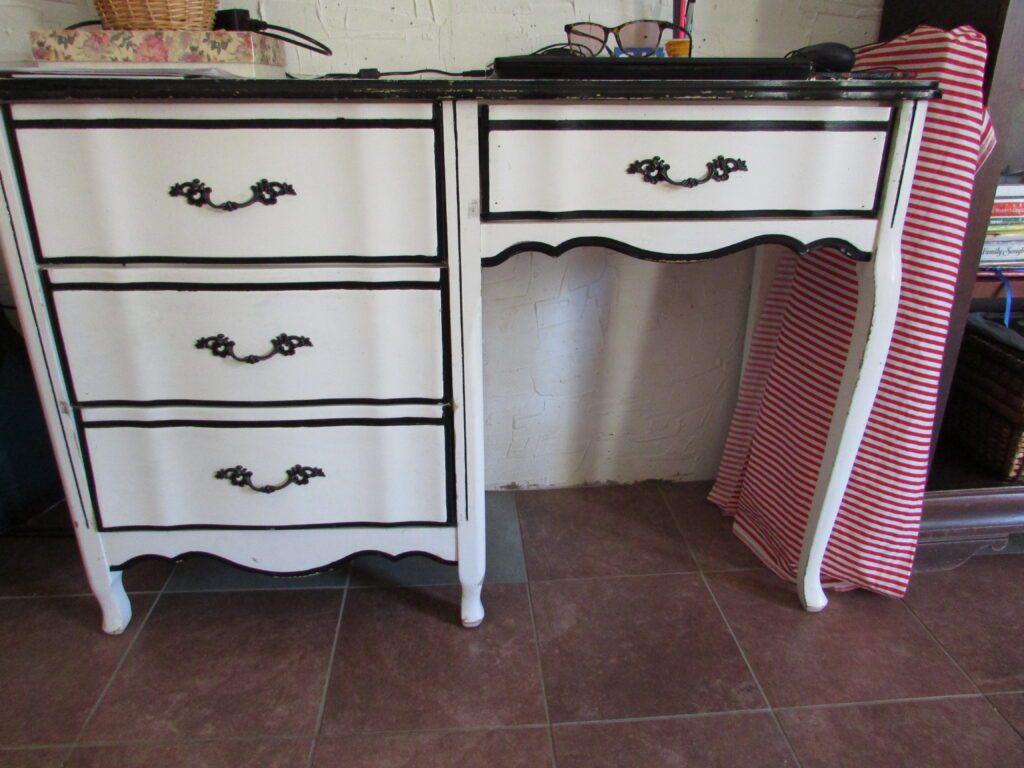
- Shop garage sales and Craigslist. Sometimes you can find pieces that look like they’ve barely been used. Sometimes you can find hidden gems that just need a little TLC. An old couch can be refurbished for much less than purchasing it new. Dining tables can be sanded and varnished.
- Check out your neighborhood alleyways. Usually what people put out for the garbage is downright, well, garbage. But once in while they put out something that’s a little worn and a bit quirky (a drawer that doesn’t slide right), but otherwise is in good working condition.
- Shop your area flea markets.
Read the steps to creating a beautiful home on a tight budget.
How to save money on home décor.
- Assemble bits and baubles that you have around the house into a display (as I described in the introductory story).
- Ditto for refreshing the furniture in a room. For example, an unused nightstand in the guest bedroom might be the perfect accent on a living room wall.
- Learn basic crafting, like refreshing a lamp shade, making doilies (there are a variety of easy methods), and decorating old jars and dishes.
- Learn the principles of minimalist décor, and apply it to your home to whatever extent suits your style.
- Shop for craft supplies at discount department stores rather than hobby or sewing stores.
- Only buy what you know you’re going to use. A corollary to that: if you have ADHD, save receipts like they’re going out of style so you can return the impulse buys next week.
- Peruse thrift stores. You can find a variety of pretty/cute/whimsical home accessories at places like Goodwill and The Salvation Army.
- Use dollar stores judiciously. If all you need is a bag of small seashells to decorate a plate or for crafting, for example, dollar store quality is just fine.
- Purchase art from Etsy that you can print out at home.
- And/or purchase prints from discount department stores.
- Shop around for inexpensive, yet stylish, frames for the prints. Sometimes you can find those at thrift stores, as well.
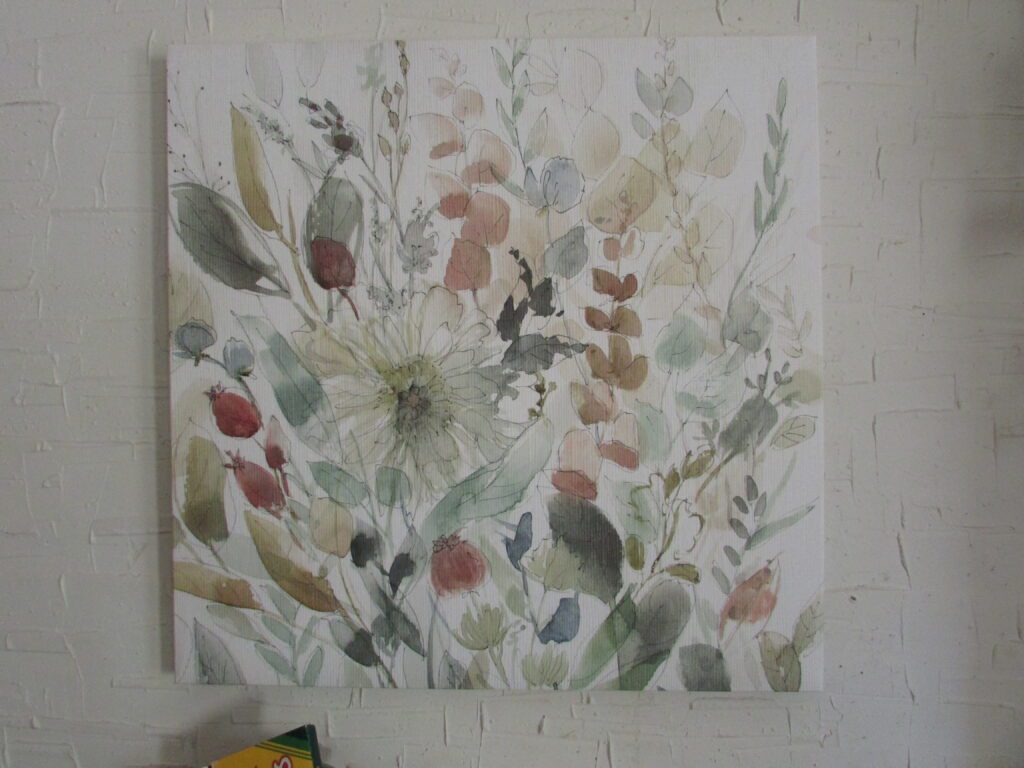
- Purchase inexpensive art printed onto canvas and hang it unframed, as this one that I bought from Amazon:
- Shop around for throw blankets and throw pillows, as the prices for such accessories can vary wildly even though the quality isn’t that much different.
- In a real frugal pinch, you might purchase inexpensive bed pillows and cover them with decorative pillow cases or pillow shams to use in place of throw pillows.
- Speaking of bed pillows… only have as many on the bed as you need for sleeping. Seriously. How many times a day do you, let alone other people, go into your bedroom? And when you go into your bedroom, how often do you look at those six decorative pillows and swoon with gratitude and joy?
I rest my case.
Read this article for 10 ideas on decorating your home for free.
Frugal homemaking for housecleaning: how to save money on cleaning supplies.
- Use vinegar to wipe down windows and mirrors, and microfiber cloths to rub off the streaks.
- Use a vinegar solution (equal parts vinegar and water) for just about every surface. Whip in a drop of lemon oil to add a nice scent and to increase the germ-killing powers.
- Or, use a squirt of liquid castile soap or inexpensive dishwashing liquid in water.
- Just use water and elbow grease if you’re not worried about sanitization.
- Use a baking soda paste for caked-on grime.
- Use orange essential oil to get off sticky spots on hard surfaces.
- Save old T-shirts, sheets, wash cloths, and hand towels to use as cleaning rags.
- Clean your toilet with a chemical cleaner like 2000 Flushes. Believe me, I’ve tried the vinegar and baking soda method. The pipes still got clogged with that ick that urine leaves behind. Sometimes, the more expensive product ends up being the cheaper way to go.
- If you have children over the age of seven, teach them every single chore. Have them help out during cleaning time.
- Wash laundry with a mix of one tablespoon washing soda and a teaspoon or two of shaved bar soap. Add a tablespoon of Borax for extra-dirty laundry.
- For stains, look online for how to treat that particular kind of stain with common household products. Many are easily treatable with a soak in vinegar or club soda.
- Scrub down the bathtub every time someone uses it. It takes a lot less time than having to scrub off the soap grime that eventually builds up when you ignore it for a long time.
- Hang laundry out to dry when possible. Clothes dryers use an inordinate amount of electricity.
- Use a damp rag for dusting furniture. Polishers aren’t necessary, and they add toxic chemicals to the air.
Read more on frugal housecleaning for neurodivergent women.
How about cleaning yourself? Here are ten ways to save hundreds of dollars per year on personal hygiene products.
Frugal homemaking in the kitchen.
- Purchase dishes and eating utensils at a dollar store, discount department store, garage sales, and/or thrift stores.
- Buy only as much as you need for your family, plus four more settings. This gives you leeway for breakages as well as extra for guests.
- Purchase stainless steel plates. I did this when the second-to-last plate of a Corelle set broke. I decided I was tired of cleaning up shards of glass for months after a breakage, and I wanted never to have to buy a new plate again. Related to that…
- Use stainless steel cups and coffee mugs. Yes, they’re pricey, but they’ll never break, so unless you lose them or drive your SUV over them, they’ll last for the rest of your life.
- Buy most of your kitchen supplies – knives, measuring cups, saucepans, etc. – at a discount department store. The exception is if you use knives a lot and want to get a set that will last a long time with regular use.
- Refrain from impulse buys of gadgets and small appliances. Follow the old adage of, “If you don’t already have it, you don’t really need it.”
- When it comes to pots and pans, avoid the hype of silicone- or porcelain-coated stainless steel, waterless cookware, and so on. For a typical family, one small and one large cast iron skillet, plus two to three different-sized stainless steel pans, will do.
How to save money on food on your frugal homemaking journey.
- Make as many meals from scratch as possible. This article shows you how to make that simpler and easier.
- If you go out to eat, order a meal that is twice the number of calories that is good for you to consume in one sitting. Enjoy half of it, and take the other half home to finish the next evening.
- Find coupons online, or in the grocery store’s flyers, for the scant amount of processed foods you’re going to buy for an occasional treat (wink, wink).
- Peruse online flyers to find out which stores in your neighborhood are having sales on the types of produce and low-fat meat you want to buy.
- Don’t buy fruit out of season – e.g., peaches in the winter or apples in the summer.
- Try to have at least three months of non-perishable goods on hand at all times. I mean, food you actually eat, not foods that preppers tell you to store. This assures you won’t starve should you temporarily lose your household income.
Frugal homemaking also includes landscaping and yard work!
- If you want to landscape your front yard, do some hard research before buying anything. Otherwise, you may end up planting pretty rabbit food (aka many flower varieties) or bushes that require way more water and maintenance than you’re willing to give. That said…
- Xeriscape your yard. Based on the advice of local experts, plant only species that do well in your area naturally, without supplemental watering or fertilizing.
- If you’re planning to maintain your yard yourself, purchase the best quality equipment you can find at the best possible price (you may have to wait a few months for a good sale).
- On the other hand, hiring an inexpensive lawn maintenance crew might be less stressful long-term. It would also save you the hassle of storing and maintaining equipment. If the two teenagers down the street are willing to take on the job, you can save even more money… providing you train them well and they are responsible.
Read here for five ways DIY landscaping nourishes the neurodivergent soul.
Saving money on organization and storage: a frugal homemaking hack not to be overlooked!
- Declutter, declutter, declutter. And actually throw out what you’re not going to use (watch this video if you struggle with that). Because the fewer things you have in the house, the less work and money you need to put into storage and organization.
- Beyond that, if you’re serious about saving money on storage and home organization – really serious… avoid The Container Store at all costs. You can easily leave the place or their website after an hour, hundreds of dollars poorer.
Says the woman who owns a whole bunch of product from that brand. Okay. IF you’ve exhausted EVERY OTHER ALTERNATIVE, and you still can’t find the kind and quality of box you need, you have my permission to buy it from The Container Store. But only if you PROMISE not to overdo it and to stick to a budget. Okay???!!! Trust me – that place is addictive as Hobby Lobby.
- Consider the use before you buy a box. If you’re going to fill it with lightweight items and not stack anything on top of it, cheap plastic will do the trick. Otherwise, consider purchasing a brand with harder plastic and better quality lids.
- Shop garage sales and thrift stores for repurposable containers. I use an old but decorative tin for storing charging cords, and a plain metal one for storing batteries and a battery charger. They are each part of the living room décor.

- Buy a storage ottoman and/or poof for your living room. They don’t have to contain extra throw blankets or knitting projects. Instead, they can hold extra bed linens and towels, crafting materials, or out-of-season clothing.
- Repurpose cabinets and sideboards. If your house contains a built-in sideboard, but all of your dishes easily fit into the kitchen cabinets, why not use the sideboard to store extra towels and linens, small boxes of arts and craft materials, or small boxes or decorative bags of seasonal décor?
- Have a place for everything, and everything in its place. If you don’t lose or misplace things, you’ll save money replacing them. I provide detailed help for keeping your home tidy here.
Read about why saving money when you have children is different for neurodivergent parents.
Last but not least: a frugal homemaking tip you probably haven’t considered.
Set up routines, and follow some semblance of a schedule. The more people who live in your house, the more important this is.
Why is it a frugal homemaking hack? Knowing where everyone is supposed to be at any given time, as well as establishing healthy routines, keep the day flowing smoothly. It thereby prevents arguments, misunderstandings, lost time, and sloppy personal care that could eventually require professional intervention (e.g., cavities in teeth that are rarely brushed).
Routines and habits that you form around thermostat settings save money on energy. Routines and habits regarding housecleaning and tidying prevent loss of items.
Routines and habits regarding mealtime can prevent food waste.
And so on.
Frugal homemaking: a creative challenge that brings joy and meaning.
Working to build a beautiful and relaxing space for yourself – and your family, if you have one – isn’t a chore. Rather, it’s a fulfilling endeavor that brings out your resourcefulness, creativity, and determination. It’s a journey that brings interest, texture, and color to even the dullest days.
Have any frugal homemaking hacks you’d like to add? We’d love to hear from you in the comments!

1 thought on “The Ultimate Guide to Frugal Homemaking”
Comments are closed.