Self-care for the neurodivergent woman is critical for her mental health. Here are ten lessons I wish I would have learned at a much younger age.

The story.
Get up. Get dressed. Get moving.
Keep moving until my work day is over, or until I’ve crossed everything off my to-do list.
This is how my days used to roll. Because you’re supposed to be as productive as possible, right? Supposed to be “responsible.” Sure, breaks were important, but only fifteen minutes here and there, and then back to the grindstone.
Because I was worth nothing if I wasn’t at the grindstone. Working. Doing chores. Volunteering at my church. Being all things to all people.
Like persistent currents of water wearing down a stone, it all was wearing on my health and well-being. I experienced burnouts and meltdowns before I knew what they were.
I didn’t realize two things. First, I have a neurodivergent brain. Second, the nine-to-five grind and work ethic rules were established by neurotypical people.
Both are extremely stressful for neurodivergent people. Especially women, who are expected to carry the burden of household and children for most of their adult lives on top of everything else.
Why you MUST get a handle on self-care for the neurodivergent woman.
If you know or suspect you might be autistic or have ADHD, or if all you know is that you’re more sensitive than most and feel more delicate than the average woman (HINT: that’s a kind of Neurodivergence), this article is for you. I’ve written it because, if I can, I want to prevent others from suffering as long as I did. Or, if you’re already fifty years old or beyond, I want to encourage you to start taking the steps to reduce your stress and find greater joy and fulfillment in your life.
The following list isn’t exhaustive, but the ten most obvious lessons I’ve learned regarding my own self-care. They also touch on the most common issues that women of all brain types struggle with.
Ready? Here’s the list, in no particular order.
#1: Get out in nature: essential for self-care for the neurodivergent woman.
Immersing oneself in nature is beneficial for everyone. It’s almost a non-negotiable for people with autism or ADHD. Exposure to sunlight, even on cloudy days, helps to raise serotonin levels in the brain.
Serotonin is the neurotransmitter that allows you to feel happy.
Besides that, there’s something about nature that grounds us. Helps us to forget our troubles, enables us to live in the moment that sitting crossed-legged on the bedroom floor with our eyes closed can’t even touch.
It may be the subtle energy all the living organisms are giving off. It may be the magnetism of the earth. It may be the fact that we have living outside in our DNA. It may be a combination of the three.
Whatever it is, it soothes the neurodivergent brain. So get out in nature as often as you can, for as long as you can.
#2: Just say no.
Living in a neurotypical world is stressful enough. Don’t add to the stress by agreeing to do things you don’t have the mental bandwidth to handle. This is trickier for those of us with ADHD or AuDHD, because we might have energy and enthusiasm for a volunteer project or girls’ night out activity in the moment of invitation, only to find ourselves dizzy with overwhelm once the engagement begins.
If that sounds familiar, for your sanity you need to allow yourself to step back and take time to think deeply about whether you can take on the activity, and still emerge on the other side with your mental health none the worse for the wear.
At any rate, don’t allow yourself to be guilt-tripped into doing something that goes beyond your daily duties. If you’re neurodivergent, your brain needs a lot more downtime than that of a neurotypical person in order to process and decompress.
More on learning how to say no to simplify your life.
#3: Establish gentle routines and rituals.
The definition of “gentle” is kindly; mild; soft. Taking life on gently is a critical part of self-care for the neurodivergent woman, and a simple way to do that is to establish morning and evening routines and rituals that quiet both your mind and body, while giving you space to prepare for the coming day (or next day) as needed. I created this two-page PDF just for you, with that in mind.
More on establishing gentle routines for neurodivergent women.
#4: Maintain a tidy home.

I know, I know, if you have ADHD this is not the easiest ask in the world. But if you don’t have a place for the important things, and those important things are never in their proper place, this only serves to increase your stress levels. At least keep your home at that minimum of tidiness.
That said, most of us experience anxiety, however subtle, when everywhere we turn there is clutter. It’s a sensory processing thing, and therefore important to keep somewhere in the list of your priorities.
Keep it simple by decluttering one small space every day. Once that task becomes a habit, keeping your home tidy won’t be any more difficult than brushing your teeth.
More on how to keep your home tidy.
#5: Journaling as part of self-care for the neurodivergent woman.
I journal to track certain symptoms. I journal to vent. I journal to remind myself what’s important in life. I journal to note important events and conversations.
Has journaling helped me to grow? Perhaps not in the warm-fuzzy way that journaling enthusiasts insist is a certain outcome, all of your dreams coming true, gaining sudden insight into a problem, etc. But writing down my frustrations and personal revelations does seem to help me make baby steps forward in the various aspects of life.
Write every day or every week. But if you’re going to journal, don’t turn it into a requirement. Let it be something you do in a quiet moment when your mind is nudging you to work through something on paper.
This one that I created several years ago serves as a planner and goal-achieving tool, as well.
Gratitude journaling is especially helpful when you’re going through a trying time – and if you’re a postmenopausal neurodivergent woman, those trying times come much more frequently than ever! Forcing yourself to think about your blessings helps you regain a healthier perspective on things.
More on using journaling to facilitate simple living.
#6: Learn executive functioning hacks.
Many, if not most, of us neurodivergent women learn some of this early on, before we have a clue that our brains are differently wired and therefore require extra support. Dismayed by our inability to remember the simplest things, to arrive anywhere on time, or to keep our home or workplace organized, we set up systems or develop techniques that shave off the top level or two of distress and frustration over keeping life in order.
But we can usually do more, if we only had the right tools. Setting up a simple Home Command Center might be the best. It’s a matter of finding a small space in your home which you are bound to frequently visit, and having a calendar and to-do list set up there.
There are numerous other executive functioning hacks, some of which are included in this article of self-care for neurodivergent women. Acquiring a simple tool that aids with setting up a Home Command Center, as well establishing routines, are the foundation of them all.
#7: Regular movement.
One of the great things about having a neurodivergent brain is being able to focus on one particular project or activity for long periods of time.
Unfortunately, that trait can become detrimental if we’re not careful. Our bodies were made to move throughout the day, not sit for long periods of time, a habit which could eventually lead to health problems.
I recommend that you set a reminder to get up every thirty minutes, if not more frequently, to stretch, take a short walk, or do some light weight-lifting. This is even more critical if you’re over the age of fifty, like me, when your joints stiffen more easily and you lose muscle mass at the speed of a mouse who’s just been pumped up with caffeine.
Regular gentle movement also ensures continual optimal blood flow to the brain and keeps your energy levels up.
More on proper exercise for neurodivergent women.
#8: A non-negotiable, but often tricky, step in self-care for the neurodivergent woman: nourishing foods.
Let’s get this out of the way, my fellow Gen-Xers and my older Baby Boomer sisters: I don’t care what the old commercial used to say, a Snickers bar is not a nourishing food! A nourishing food is, by definition, one that promotes life, growth, or strength.
Junk food ultimately does the opposite.
For us neurodivergents, a nourishing food is also a “safe” food, one that we know won’t hurt our sensitive tummies. Though it’s good to push ourselves to eat the not-so-safe healthy foods in small portions, we will have a lot less anxiety if we can find foods that please our palate and our stomachs, as well as meet our nutritional needs.
Once you’ve sorted that out, build meals around them.
More on how to create a simple, healthy, and tasty diet.
#9: Make time for creative outlets.
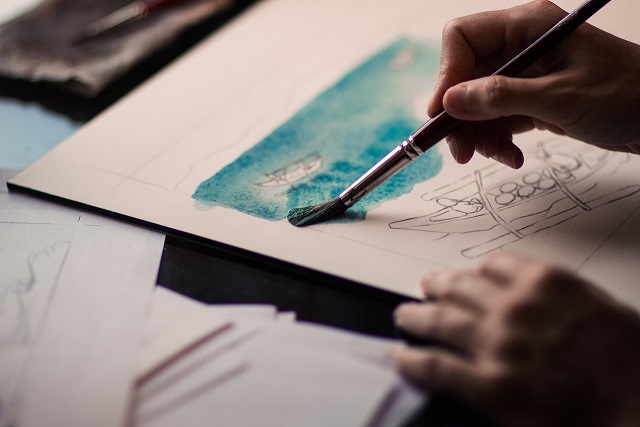
For the most part, scrolling through social media is a waste of time. It, as well as news outlets, breed stress like rabbits on steroids.
If you haven’t already, I encourage you to replace most of your unnecessary screen time – minus the enjoyment of non-stressful films, documentaries, and T.V. shows – with creative endeavors.
You might learn how to zendoodle. Paint with watercolors. Crochet. Play an instrument. Write stories. Dance. Make crafts.
You don’t have to excel at what you choose. Simply put your hand to it and have fun.
More about non-tech creative expression.
#10: Find a career or job that fits.
This tip in self-care for neurodivergent women is often a dicey one. It’s easy to figure out you’ve chosen the wrong major in college or applied for the wrong job. It’s a lot harder to get another job or start a whole new career.
But if you feel you need to do so for your mental health, sit down and make a list of your strengths and weaknesses, your skills and abilities, then jot down some careers or jobs that might fit you better.
Start sending out resumes. Take an evening community college class once a semester. Or, try your hand at starting a YouTube channel, blog, or Etsy business and see where it might take you.
More about reasons an autistic woman might need to change her career or job.
BONUS LESSONS
When most people think about “self-care,” they usually don’t think about personal finances and time management. Yet, both are important for the overall health and well-being of any individual. Both can be tricky for neurodivergent women over 40 to navigate.
Read this article to learn how to set up a simple, tired-brain-friendly money management system.
Read this one if you need a leg up on time management, particularly if you have ADHD.
Assessment time: how do you score regarding “self-care for the neurodivergent woman”?
Likely as not, you’re already engaged in one or more of the suggestions in this article. Would you like to ramp your engagement up a notch? Try something new?
What in this article struck a chord? Why? What are you going to do about it? You may want to click on a few of the links to read about the various stress-reduction tips in greater detail.
Whatever else you do, remember: it’s okay to take care of yourself.
You are totally worth it. 🙂

2 thoughts on “Self-Care for the Neurodivergent Woman: Ten Hard Lessons I’ve Learned”
Comments are closed.