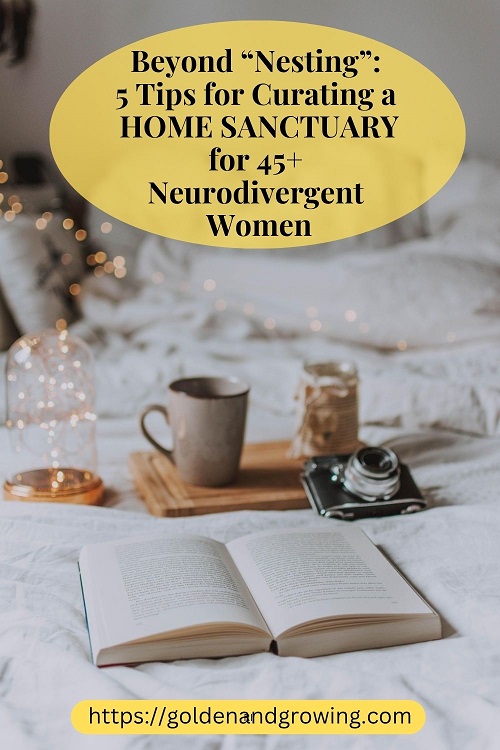
Neurodivergent women midlife are usually dealing with cumulative sensory overload. Life-changing tips on how to reduce it by turning your home into a sanctuary.
The story.
In horror, I watched as the ball bounced off the large glass vase on the single high shelf near the hallway between the kitchen and dining room. At least no one stood underneath as the vase teetered, fell of the edge, and crashed to the tile floor, shattering into a thousand pieces.
Had my son done that on purpose? Maybe, maybe not. His aim was generally terrible. But the wicked laugh my three-year-old let out told me that this time, his aim might have been right on target.
I tried to control my anger as I went for the broom. He was just a little kid, after all. But I’d already dismantled the dining room and turned it into his play room. The dining room table now cramped the family room.
And I couldn’t have any of my nice knick-knacks out. My son would find a way to destroy even the wooden ones, I was sure.
Childproofing the house had turned it stark and sterile. I didn’t even bother buying new, nicer throw pillows for the couches. What was the point, when my son was just going to use them like balls?
The anger became hot tears pricking behind my eyelids, and I demanded loudly of my husband that he take down the other two glass pieces on the shelf. I was sick of this ugly, boring house. When was I ever going to be able to make it beautiful again?
From nesting to sanctuary: the prerogative of the neurodivergent, midlife woman.
If you’ve spent the past couple decades of your life raising children, no doubt you have a story similar to the one I just told. When children are young – and in some cases, even while they’re teens – the house needs to be rowdy-proofed.
Stuffed animals should be the only décor on high shelves.
However, as the children mature and leave the nest, and as we enter midlife, we can dismantle the nest and convert it into a personal sanctuary.
This is as true for neurotypical women as for neurodivergent women, because fluctuating and dropping levels of estrogen and progesterone have a way of inducing greater stress and more fatigue in our lives. Neurodivergent women are likely experiencing cumulative fatigue, or burnout, as well.
And heightened sensory sensitivities make comfort and safety vital. When the children leave the nest, turning the home into a cozy, calming refuge becomes an imperative rather than a luxury.
For our own well-being, we need to transition the appearance and feel of our homes from a functional dwelling to a meticulously curated sanctuary.
And then there’s neurodivergent midlife executive dysfunction.
I’ve discussed at some length about how hormonal shifts affect the neurodivergent, menopausal brain. This not only leads to more intense sensory issue, but also amplifies issues with executive function.
A large, cluttered, or overly complicated space demands more executive function output than a simple, tidy space. And if you’ve been living in the same house for years with children, it’s likely to have become much more cluttered and complicated than your midlife brain can stand.
If you’re glancing around your home as you read this, nodding your head in chagrin, then it’s time for a change. It’s time to transform the nest into a place of restoration, where the nervous system can safely drop its guard and recover from the day’s masking and stress.
Will this cost some money? Probably. But as I illustrate in my post, “The Ultimate Guide to Frugal Homemaking,” you can find just the right furnishings and accessories for a song, if you know where to look.
Creating hygge: sensory-friendly design for neurodivergent women.
Hygge, pronounced “HOO-gah,” is a Scandinavian word that refers to a cozy and comfortable atmosphere. I think some neurodivergent Swede or Dane must have invented it, because it’s all about creating a sensory-friendly home.
Standard decorating advice focuses on aesthetics, and only aesthetics. And that’s part of creating a cozy home. However, for midlife and older women, it goes much deeper.
Touch and texture.
Textural comfort is essential for any neurodivergent adult, but especially for women in their mid-forties and beyond. It provides both stimulation and nervous system regulation.
For furniture, thrifting pieces rather than purchasing them new can meet your goal of textural comfort more easily. For example, the upholstery of gently used sofas and armchairs tends to be softer and more comfortable than when they are bought new. This is especially true if you can’t afford new high-end pieces.
If you can find them, vintage blankets are much longer lasting than anything being manufactured today. Velvet chairs found at antique stores provide a unique kind of texture stimulation.
Older pieces made from natural woods create visual as well as tactile texture, and are proof that they are solidly built so that you can enjoy them for the rest of your life. Sometimes you can find such items at a garage or estate sales.
Certain items, such as throw pillows, you’re better off buying new. But there are nice ones at affordable prices, including pillows with particular textures such as corduroy.
Visual noise reduction.
A big part of your home’s transformation will include decluttering. It’s not just for neatness, but also to eliminate visual “noise” that taxes the brain.
Have only furniture pieces that people in your household use, and which add visual interest or wholeness to a space. Whether furniture or accessories, make sure they add either value of some kind, or comfort. Don’t shove a side table against a wall just because a decorating book told you to.
Lighting and sound.
The type of lighting in your house, as well as how well sound is absorbed, make subtle yet significant impacts on how comfortable your home feels.
Try things like:
- Buying thrift store lamps for soft lighting.
- Putting dimmers on existing lights, if possible.
- Using Roman shades or sheer curtains to mute sunlight.
- Placing enough bookcases against walls and furniture in the middle of the floor to prevent an echo chamber.
- Display quilts or tapestries on walls to absorb sound.
Such actions contribute to a low-demand sensory environment.
Those are basic, physical-level changes. But neurodivergent adults experience more internal, insidious stressors, as well.
Like financial stressors.
Reducing financial stress: a frugal approach to home sanctuary.
You don’t hear a lot about financial stress being a sensory input. But any kind of stress is, because our nervous systems, then our brains, have to process it.
And it happens that financial anxiety is a major sensory stressor of the neurodivergent brain. I can testify to that.
That’s why I argue in favor of living frugally. It leads to financial stress reduction, which eases the sensory sensitivity burden for neurodivergent women.
And most of us are in one of two places. We’ve either retired, and worried that our nest egg might not last until we die. Or we haven’t saved up enough money to retire, and worry that we never will and that social security won’t be enough.
A frugal lifestyle, then, becomes part of our toolbox of reducing sensory input. Moreover, it serves as an executive function hack. The slow, deliberate process of curating fresh but gently used furniture and accessories for our home forces intentional living.
You can’t impulse buy a complete living room set at a thrift store. To finish an entire room requires planning and patience, which provides the best insurance against buyer’s remorse.
Meaning over monotony: how frugal homemaking leads to creative expression.
Another way that frugality aids in turning your home into a sanctuary is that, when you can find vintage or unique used pieces, they carry a story. And putting them together is a way of expressing yourself creatively.
In addition, finding such pieces brings pleasant surprise, which translates in your brain as a dopamine hit. This satisfies the neurodivergent need for novelty and connection.
How your budget becomes a shield.
Purchasing used, or new yet inexpensive items, allows you to live within your means. This equates to fewer worries, so you have more cognitive energy to manage your sensory sensitivities, executive function issues, and social difficulties.
The long and the short of it: as you transform your home from a family nest to a personal sanctuary, follow the laws of frugality and you will reduce the financial stress usually associated with home makeovers.
If budgeting overwhelms you and you need a simple tool to stay on track, click here for the gentle budget printable I created just for you!
The sacred space: you have permission to prioritize a home sanctuary.
As we neurodivergent women age, we need to create a home that will serve as our safe space, emanating warmth and providing the sensory comfort we don’t just want, but need. Because the cumulative burnout from years of masking and living in a neurotypical world – not to mention the stress of raising children – as well as sensory overload, have taken a silent toll.
Creating a sanctuary within our home helps us to heal and reenergize.
Doing it the frugal homemaking way enables these changes without adding financial stress.
You have permission to stop prioritizing the needs of others, and to start prioritizing your internal need for rest and regulation. If your soul needs a fuzzy beanbag chair in the corner of the living room, even though it doesn’t go with anything else, go ahead and buy one.
Do you have a thrifted item, or something you’ve owned forever, that brings you special sensory comfort? Please share with us in the comments!
