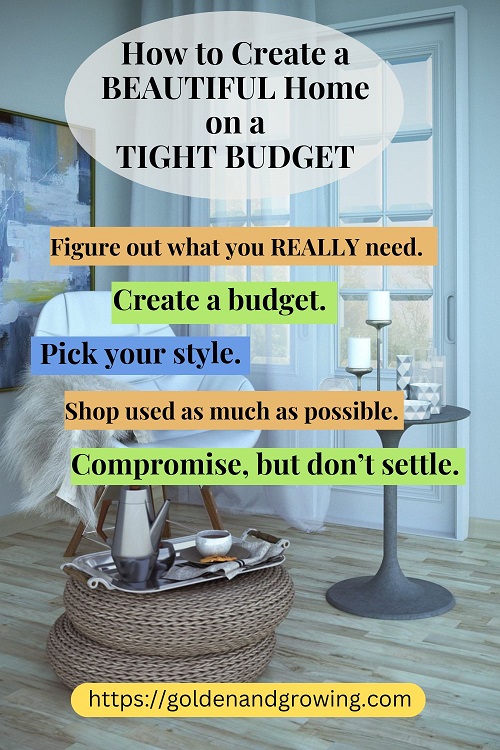
You CAN have a beautiful home on a tight budget that (mostly) precludes new furniture and expensive accessories. Following are nine steps to do just that.
The story.
I stood in the middle of the living room of the apartment I’d just begun renting – my very first! The son of the owner of the thrift store had just dropped off the items I’d purchased earlier: a metal-framed rocking chair with a gaudy, bright orange cushion; a large wooden desk with no drawers but a built-in shelf on the back; and a small T.V. stand.
The small, plastic shelf unit that I’d had in my college dorm sat against one wall, housing the few books I owned, some notebooks, and a radio.
In my bedroom was a twin mattress that sagged in the middle. I had no plans to buy a dresser at the time; I’d moved to the Dallas-Fort Worth area on a wing and a prayer, hoping to land a teaching job before the summer was over. At age twenty-three, I had less than ten thousand dollars saved up, and had to be extremely frugal.
The frugality resulted in the ugliest living room anyone had ever seen. And a bed that consisted of a mattress on the floor, its sagging spot shored up by old clothing.
But it was the best I could do on the spur of the moment in a city brand new to me.
You can do better.
I’ve learned a lot about saving money on furniture during the ensuing thirty years. As a neurodivergent woman, a big part of reducing my stress levels has included living beneath my means so that I always have money in the bank.
I’ve learned to be a frugal homemaker.
But being frugal doesn’t mean resigning yourself to an ugly home. You can save a lot of money on furniture and still end up with a beautiful home, one that suits your style, personality, and sensory needs.
Following are nine steps to get you headed in that direction.
Step #1 in creating a beautiful home on a tight budget: Figure out what you really need.
Time to shut out the voices of all the interior decorators you’ve ever heard or read, and think for yourself. My family has no use for a coffee table, so we don’t have one. If you don’t need the obligatory side chairs that traditionally sit across from the sofa, forget about them. If you’re at least eighty-five percent sure you’ll never have someone sleep overnight in your guest bedroom, don’t buy a bed and dresser to put into it. Turn the room into a home gym, office, library, or indoor garden.
Or, heck, leave it completely empty. A lot easier to clean that way.
When you don’t buy items that you don’t plan on using, you have more money to spend higher-ticket items that are hard to find in good condition used, such as sofas and recliners.
The beginning of creating a beautiful home on a tight budget is to go through each room and make a couple of decisions.
- What you really need in each room.
- What you want to add, if you have the money for it.
Make a list of your “needs” and “wants” for each room.
Step #2: Write out a budget.
Depending on how much spending money you have at the moment, you may have to wait on purchasing the lesser-necessary furniture until your financial situation improves. You need a bed, a small dresser if you don’t have a closet, and a table and chair for working and eating.
Prioritize those items first, and write down the maximum you’re willing to spend on these basics. You can get a good idea on the current market price for any used piece of furniture by looking around on Craigslist and poking around your neighborhood thrift store or online consignment shop.
Then write down you max price for the other pieces of furniture: sofas, bookcase, rocking chair (a necessity for many of us autistic women), desk, and so on. Your ultimate goal is to find pieces that you like for considerably less than the maximum price you listed. The exception is if your budget is super-tight and you know the max you’re writing down is pushing the limit of finding a quality, attractive used piece.
Step #3 to create a beautiful home on a tight budget: Decide on a style and/or color theme.
Confession time: there is a space in our house that has three differently-colored wood (or varnish) pieces in a ten foot stretch. It’s not the greatest look, but I have too much demand avoidance around figuring out how to make it more coordinated.
Besides, we’ve all become used to it.
But too much variation in color, especially when it comes to natural materials, isn’t pleasing to the eye. That’s why you should determine ahead of time what color wood you’d like when it comes to furniture made of wood. If your sensory sensitivities demand a monochromatic scheme or neutral colors with the occasional color “pop,” decide that before you start looking so you don’t end up settling for a bright yellow desk with a red Windsor chair.
On the other hand, if you want to decorate with primary colors, go for it!
If you’re not sure what you like, spend some time on Pinterest looking at various interior design schemes. If you’re going to share your home with someone else and they care about the décor, get their input, as well.
As far as style, eclectic is perfectly fine, as long as you don’t have pieces that clash (like our three different colors I described above).
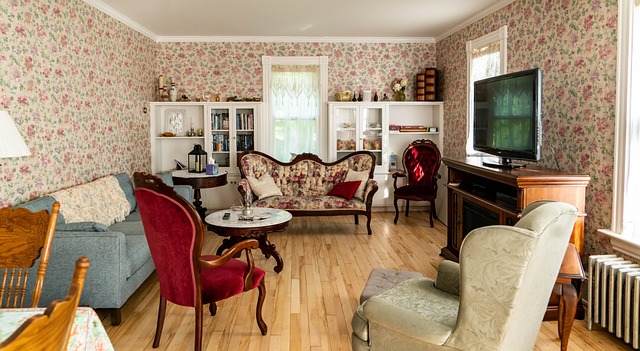
But if you really, REALLY love French country, or cottage, or Victorian, decide before you set foot into the first store or shop. Barring an estate sale, you probably won’t be able to find everything in the style you want, but you should be able to find the largest pieces in that style.
Knowing what you want will save you time and money.
Step #4: Put on your patience hat.
As you endeavor to create a beautiful home on a tight budget, you will need to exercise patience, and a lot of it. Otherwise, you’ll end up with a junkie-looking home, like my first apartment.
Like I said before, make the necessities your number one priority in shopping for furniture. Once you have those, take your time with the rest.
That begs the question: where do you look?
Step #5 to create a beautiful home on a tight budget: Shop used most of the time.
Make time to visit thrift stores, flea markets, and furniture consignment stores. Antique stores often have non-antique, but vintage and discount-priced pieces. Check your local Craigslist ads. If you live in a neighborhood with alleys, check the alley every week the day before garbage pickup and see if a neighbor is getting rid of a worn, but refurbishable, gem.
Rinse and repeat.
If time wears on and you can’t find what you want or need locally, go online. If you’ve saved more money than you expected on most everything else, go ahead and splurge on a high-end piece if you like.
If money is still tight, however, you can find a lot of reasonably priced new furniture on Amazon. Some assembly will be required, but it’s not rocket science.
In the ideal world, you don’t buy a sofa unless you can sit and lie on it beforehand. But you can always make a not-quite-comfortable sofa better with throw pillows.
Step #6 to create a beautiful home on a tight budget: Compromise, but don’t settle.
This is where your patience hat comes into play.
You could shop every day for years, and still not find the perfect sofa or dresser that you’ve envisioned. Sometimes, you have to compromise.
Buy something in a style that’s close enough, or a piece of furniture you could paint or re-varnish to help it match what’s in your mind. Or you might see a piece you hadn’t considered, and have a sudden insight as to how it can look perfectly at home inside your home.
Be willing to compromise, yes, but not settle. To settle with furniture is to purchase a piece that’s not even close to what you want because you’ve grown overwhelmed or disillusioned by the process. It also means losing more money down the line when you finally admit that you hate the piece and go out and buy something brand new to replace it.
Step #7: Spend practically nothing on accessories.
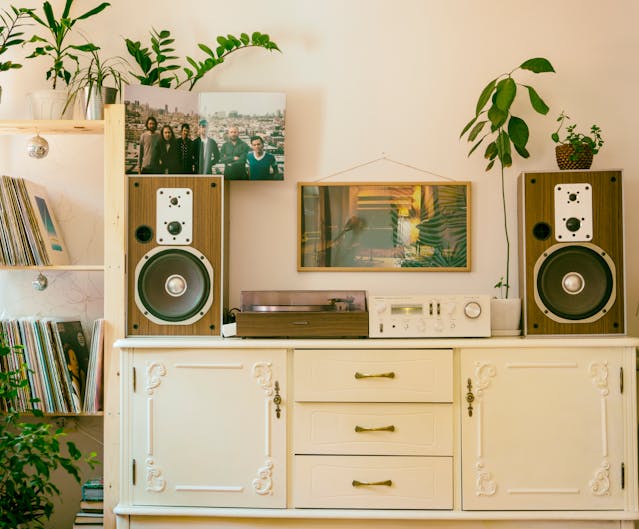
“Practically nothing” is relative. What I mean is to purchase the accessories you need to purchase as inexpensively as is feasible, and use what you already have for the rest.
You may or may not be able to find throw pillows in great condition at a thrift store. In that case, you can find new, pretty ones at affordable prices.
Maybe you’ve saved enough money to buy a beautiful vase from Hobby Lobby. Or maybe you have an awesome Goodwill nearby where people are constantly bringing in gently used, gorgeous accessories that cost hardly anything.
Be sure to “shop” around your own home (even your childhood bedroom, if that’s relevant). You might be surprised at what you already have to spruce up a corner or side table.
Step #8 in creating a beautiful home on a tight budget: Cover unsightly, visible blemishes on hard surfaces.
Is a dresser or short bookcase that’s otherwise perfect, marred with a deep gouge at the top? Or criss-crossed with small scratches? Second-hand lace curtains, table runners, tablecloths, and doilies will cover up the blemish in a jiffy. So can a beloved stuffed animal that sits upright. As can a display of your favorite knick-knacks, a box of facial tissue, or a decorative plate.
Step #9: Request specific new accessories as holiday gifts.
This one is optional, and I recognize that not everyone celebrates birthdays, Christmas, and/or Chanukah.
But if you do, and your “people” regularly give you something at those times of years, why not ask them to gift you something you really want?
A little thinking, patience, and creativity will take you far in creating a home you love on a budget.
If you’ve been yearning to furnish your home with more beauty, if you’ve been stuck in the mindset that you always “get what you pay for,” but don’t have the money to buy new, I hope this post has helped you realize that “used” doesn’t always mean “cheap.”
My family’s home isn’t perfect, and it’ll never make the cover of a home magazine.
But it’s cozy, comfortable, and pleasing to our eyes.
And that’s all I care about.

1 thought on “How to Create a Beautiful Home on a Tight Budget”
Comments are closed.